
Maka’ikiu
Maka’ikiu is the Hawai’ian word for detective. Today, I will interview Hawai’ian mystery author, Laurie Hanan. She writes stories about amateur maka’ikiu. I met Laurie in March at Left Coast Crime—Honolulu Havoc. I was thrilled to share a panel with her on Writing Hawaii.
Laurie grew up on Oahu, graduated from high school in Guam, studied at the University of Washington and lived in a kibbutz in Israel. She returned to Oahu in 1984 and had a career in the Postal Service until retirement.
Laurie writes the Louise Golden mysteries. She has published four books in the series: Almost Paradise, Another Day In Paradise, How Far Is Heaven?, and Stairway To Heaven. Her latest book, The Rainbow Connection, is a teen/young adult mystery featuring teenage Emmy whom readers will have met in the Louise Golden stories. Laurie’s short stories have appeared in many anthologies
Welcome Laurie Hanan:
MT: Let’s start with you. You live on Oahu and grew up in Pacific islands. How does your background inform your stories?
LH: I know these islands. I love everything about the place, the culture, and the people who live here. I want my readers to experience life here—not what they’d see if they came here as a tourist, but the real deal.
MT: How would you characterize your mysteries? Cozy, hard-boiled, noir, humorous, zany, amateur, other? Why did you choose that sub-genre?
LH: My mysteries are cozy with an edge. There is enough pain in the world. My goal is to give my readers a break from real life—from the horror and gut-wrenching grief that surround us and fill our news headlines. While my stories are not prudish, I avoid swearing. Any violence and sex happens “off camera.” My readers can enjoy the thrill of a hair-raising mystery while resting assured that nothing too horrific is going to happen to characters they’ve come to like and identify with. No children or animals are ever harmed in my books.
MT: Your main character, Louis Golden, is a mail carrier. Why did you decide on that occupation? How does her occupation fit in her sleuthing?
LH: I’m a retired postal clerk. During my years with the Honolulu Post Office, I heard the stories the mail carries told when they returned to the station at the end of their day. I realized they make their way through the community on a daily basis almost without being noticed—as part of the scenery. And I thought this is a perfect situation for an amateur sleuth to happen upon mysteries that need to be solved, and to gather important clues that even the police don’t have access to.
MT: Marshall McLuhan said that if you don’t know if you will like a book, turn to page 69. If you like what you read there, you will like the book. What happens on page 69 of your latest book?
LH: My latest book, The Rainbow Connection is a teen mystery. Fans of my Louise Golden series watched Emmy grow up as Louise’s nosy, talkative neighbor girl. Now seventeen, Emmy is searching for her best friend Brett, who has suddenly disappeared right before graduation. On page 69, Emmy is leaving a secretive religious retreat she’d attended in hopes of finding Brett there. A security guard walks Emmy to her car. It’s very dark. There’s no one else around. Before Emmy can get into her car, the guard forces her into a kiss.
“He jerks me roughly against him. I struggle, but he’s too strong. He runs gentle hands up my neck, through my hair. His fingers close on the hair at the base of my scalp and tug just enough so it hurts. He stares into my eyes for a long moment, then presses his lips hard against mine. His tongue forces its way between my teeth and I taste weed.” Part of Emmy—the bad part of her—enjoys it.
MT: How important is the Hawaiian setting to your stories?
LH: The setting is so vital to the stories, it’s almost a main character in itself. My plots revolve around issues unique to the islands. Life here has made the characters who they are and shaped their personalities and thought processes.
MT: Do you use pidgin in your stories?
LH: I do. I adore the Pidgin language! It’s such an integral part of our culture, it would be almost impossible to write a story about Hawaii without it. At the same time, I realize that dialog written in dialect is difficult to read. Anyone unfamiliar with the sound of Pidgin wouldn’t get it if I’m not very careful. I’ve worked at refining how I portray Pidgin, keeping the words and the syntax without dropping letters (no matter how tempting it is to write Pidgin phonetically!)
MT: How can readers contact you and learn about your books?
LH: I’d love to hear from you on Facebook at https://www.facebook.com/LaurieHananAuthor/ I can also be reached through my website at http://www.lauriehanan.space/ My books are available through Amazon at https://www.amazon.com
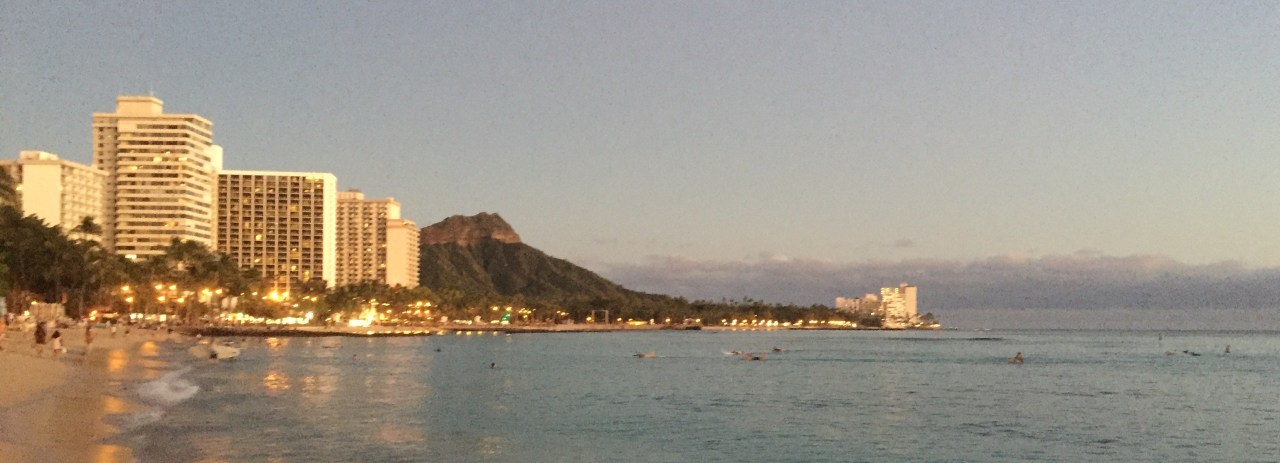


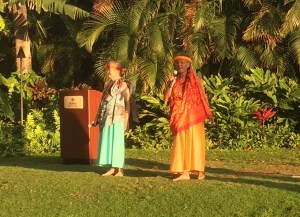

 You can’t come to Hawaii without partaking of Mai Tais. The original Mai Tai was was invented by Victor Bergeron, Trader Vic himself. It’s made with two kinds of rum, a dark rum and a light rum with fruit juice or a fruit-flavored liquor. If you want the original recipe, you can find it in my short story, Red Christmas, which is available on Amazon for Kindle. (Free today until Tuesday) At the Sunset Lanai Lounge in the New Otani Kaimana Beach Hotel in Waikiki, the Mai Tais are made with lilikoi juice. The verdict? Awesome. If you’re in Waikiki, the Sunset Lanai is a must stop for both the Mai Tais and the view.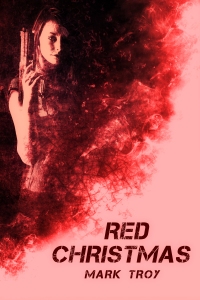
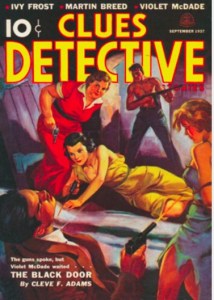

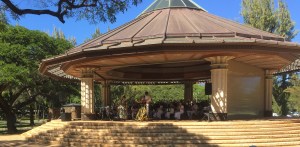
 It is located on the former site of a beach house at which novelist Earl Derr Biggers stayed and became the setting for the first Charlie Chan mystery, The House Without A Key. To this day, you can find an indoor/outdoor restaurant named The House Without A Key at the Halekulani. Locals know that the lanai of The House Without A Key is where you can experience once of the best sunset views on Oahu. Adding to the view is the beachside stage where patrons are entertained every evening by a trio of Hawaiian musicians and a very talented dancer.

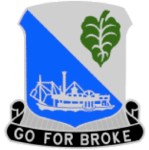 Last week I told you a little about the formation of the 100th Infantry Battalion formed of Nisei soldiers from Hawaii, which later merged with mainland Nisei who volunteered from the War Relocation Camps to form the 442nd Regimental Combat Team. After formation, the 100th was sent to Camp McCoy, Wisconsin for training. The Unit Insignia shows a taro leaf, representing Hawaii, and Mississippi River boat representing Wisconsin. The. Motto, “Go For Broke” is a gambler’s term meaning to risk everything. The 100th had another motto: “Remember Pearl Harbor,” though they are most often associated with “Go For Broke.”
 Hawaiian Noir